Company
Invitae
Role
Co-Lead Product Designer
Designing a Flexible CMS Structure and Components
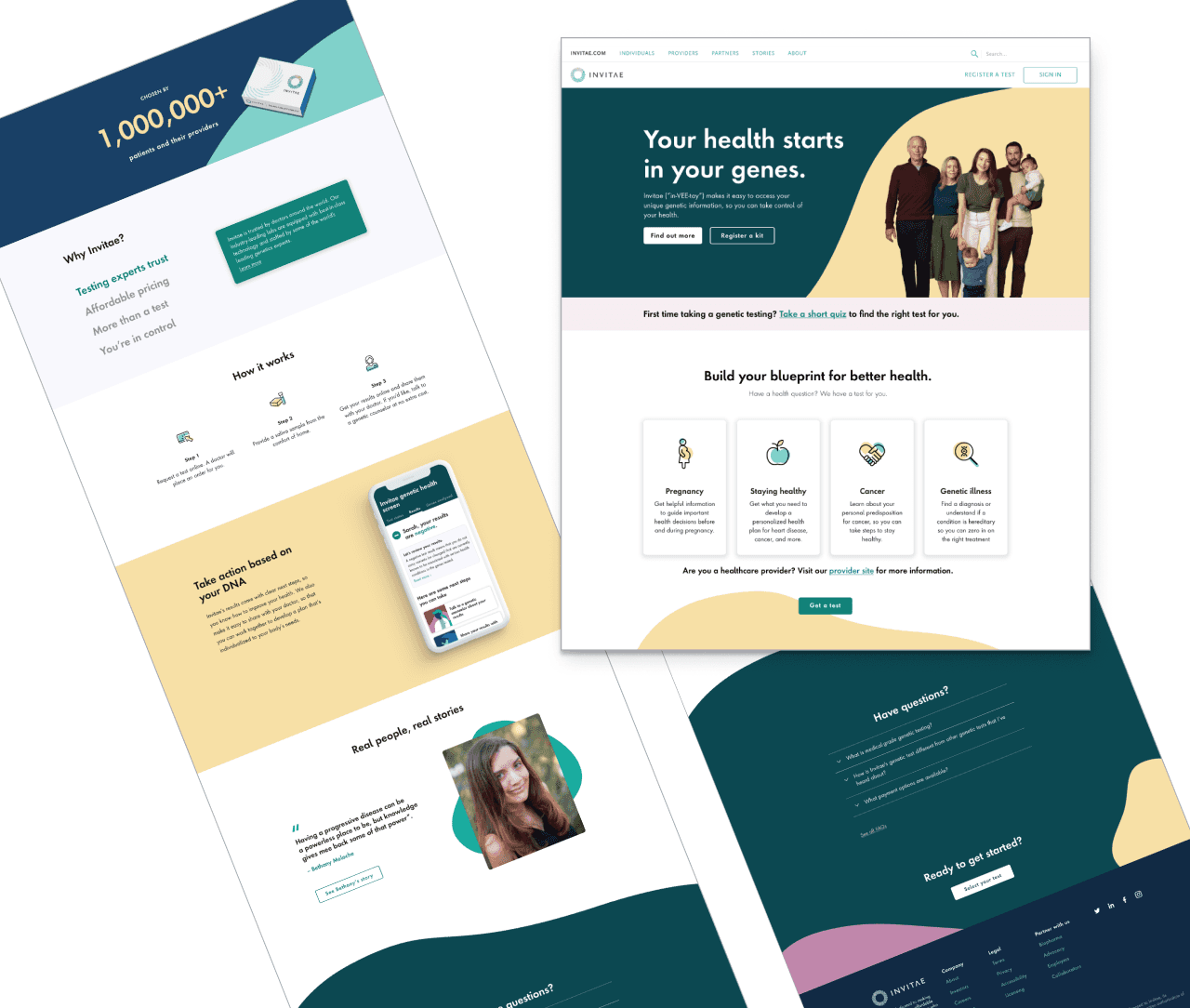
To help Invitae’s marketing and product teams move faster without relying on Engineering, we built a modular content model and moved to a CMS workflow. This let teams manage and publish pages independently, with templates and guidance to support quick iteration and maintain design consistency.
The Challenge
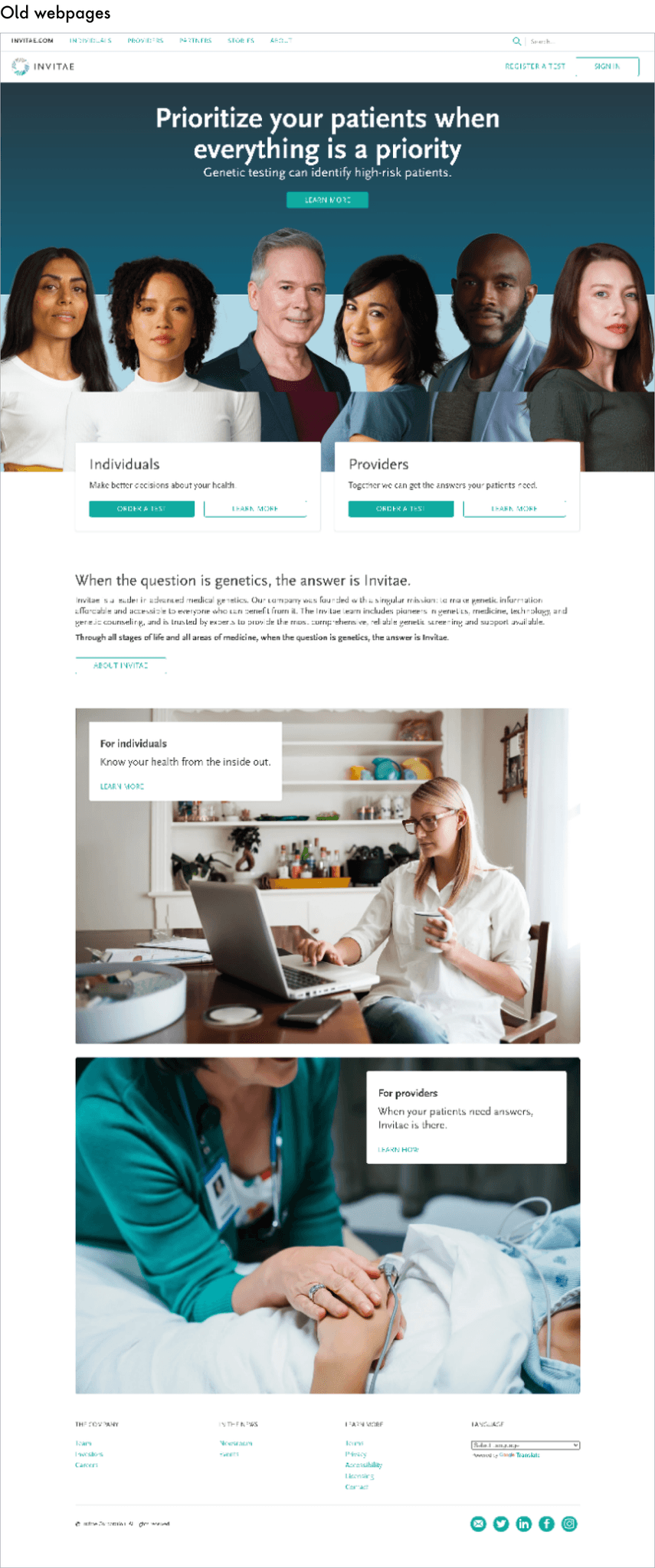
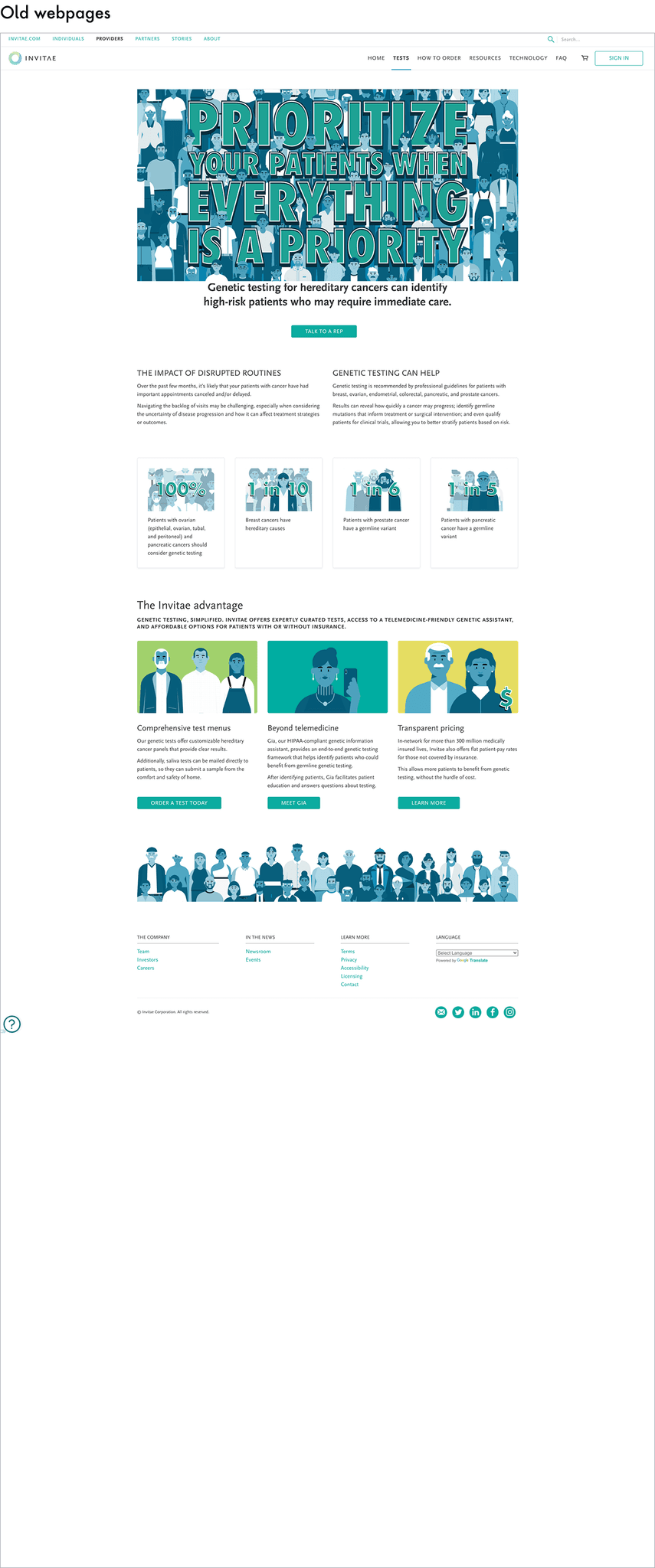
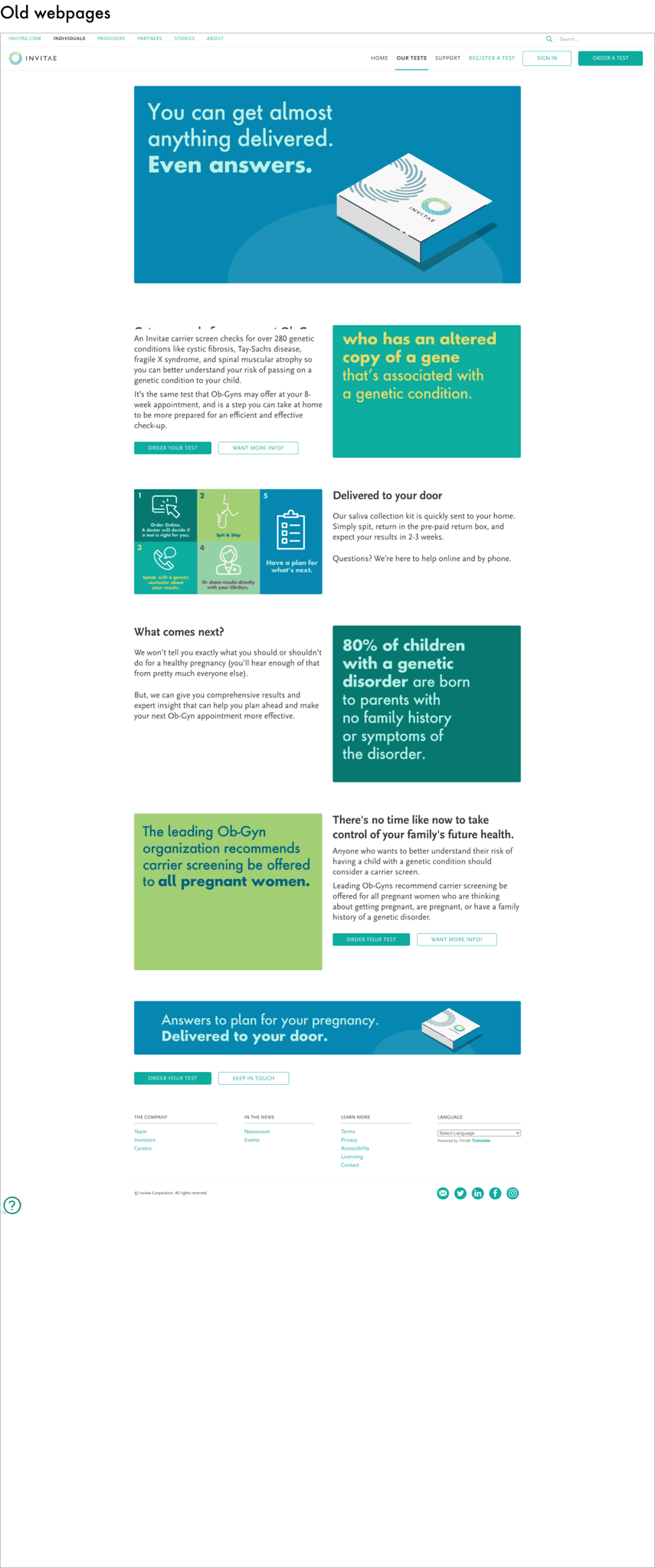
As part of a large-scale website overhaul at Invitae, our team was tasked with migrating nearly 500 existing Django-based webpages into a new structure powered by Contentful CMS. Key challenges included:
Migration & Cleanup: Migrate ~500 pages from Django to Contentful and deprecate 100+ low-traffic pages to streamline content and improve site performance.
Consistency in Branding: Ensure 100% brand consistency across all migrated pages to preserve user trust and visual identity.
Improved Usability: Enhance content for better readability, clarity, and meet WCAG 2.1 AA accessibility standards.
Empower Content Creators: Build a flexible CMS structure enabling content creators to independently create and manage pages without engineering support.
Process
I co-led this initiative with another product designer, collaborating with a product manager, developers, and marketing managers.
Planning & Collaboration
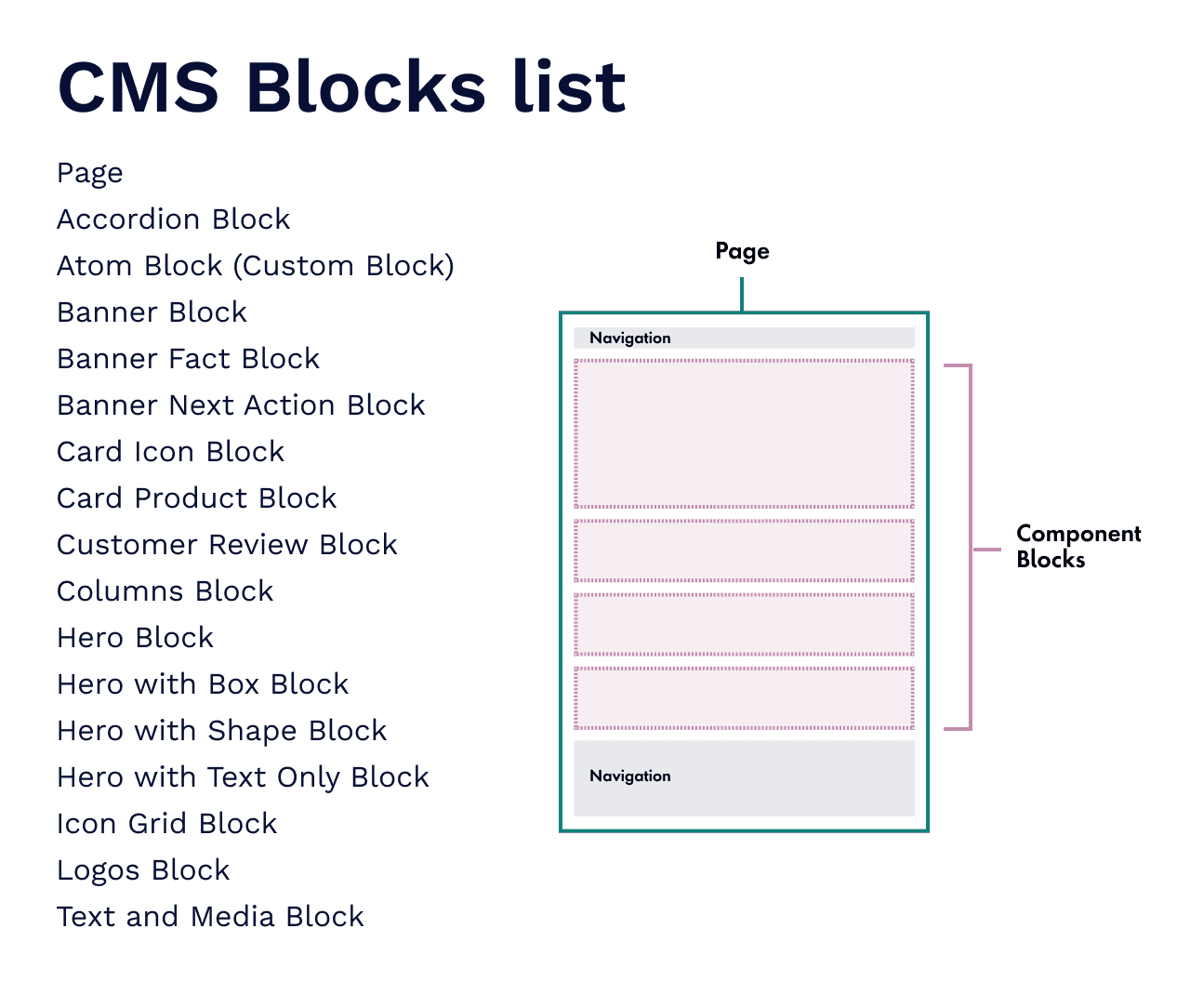
We partnered with stakeholders—mainly marketing managers, who would be the primary users—to identify the necessary CMS blocks, audit existing content, decide what to migrate, and prioritized which low-traffic pages to sunset. The dev team and product manager handled the backend strategy—planning export methods, content transformation, and field mapping from Django to Contentful.Designing Templates
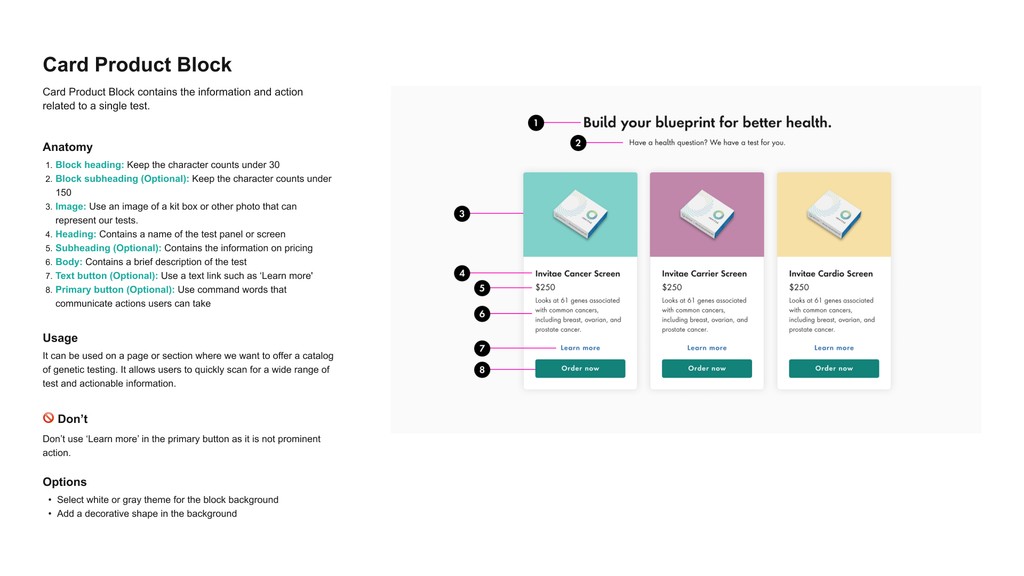
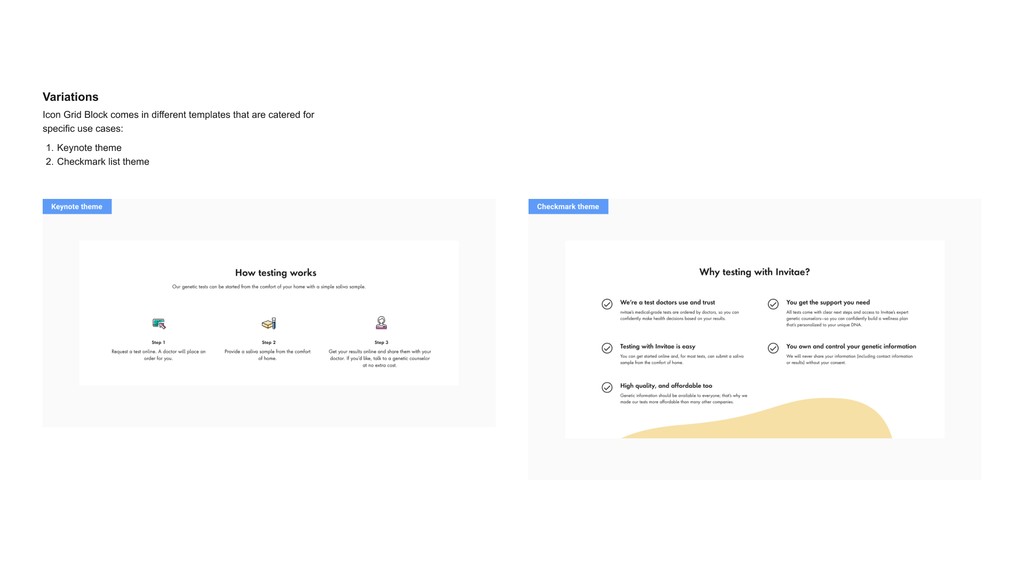
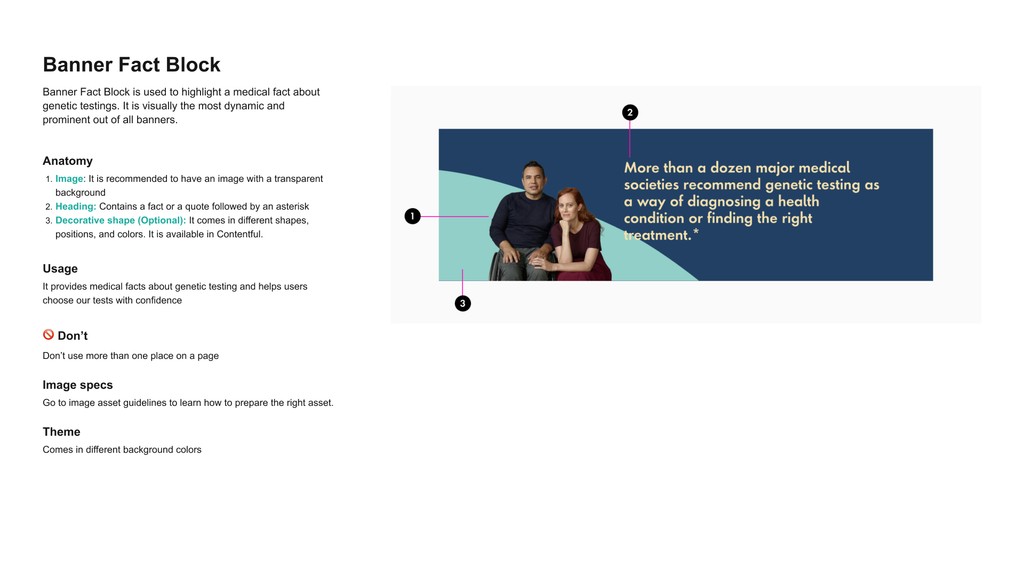
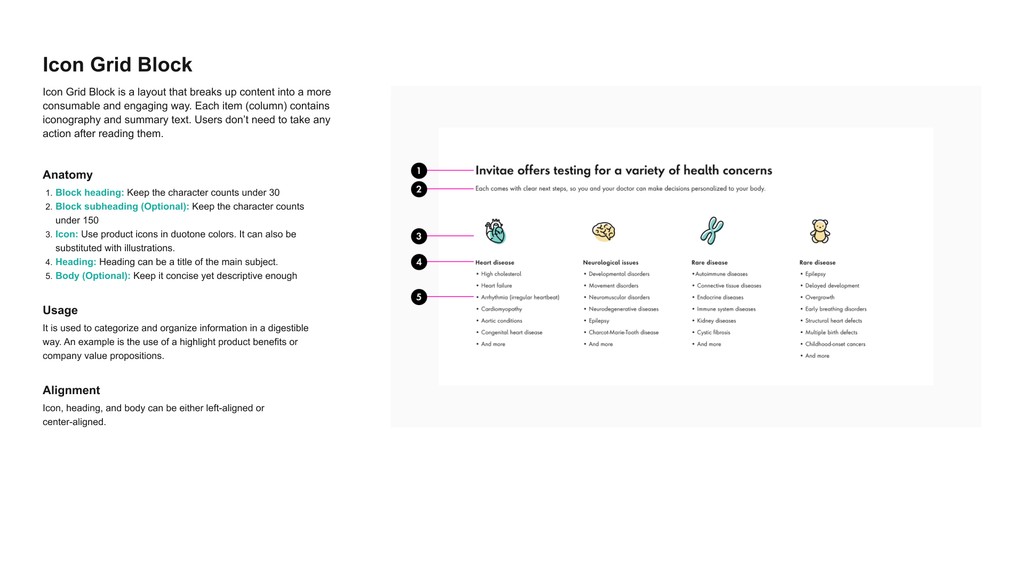
We created flexible, goal-oriented templates so content creators could focus on messaging. Pages were built with consistent navigation and customizable content blocks arranged by purpose and hierarchy.Implementation & Testing
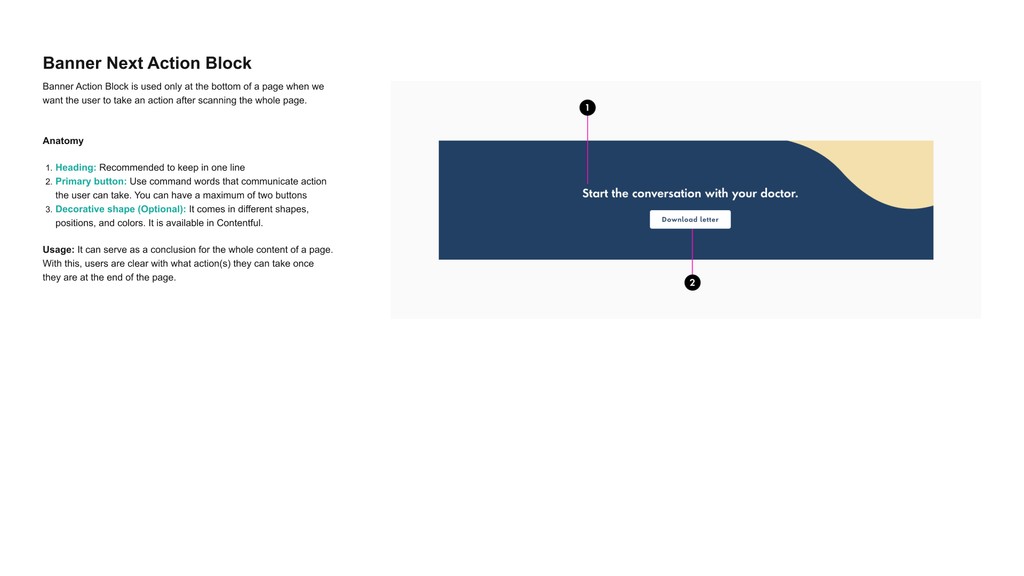
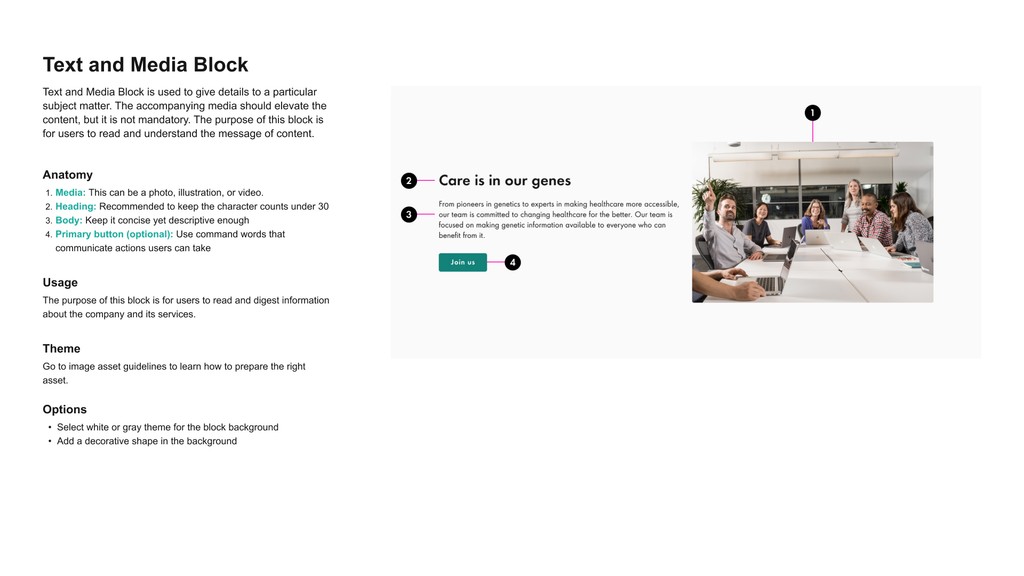
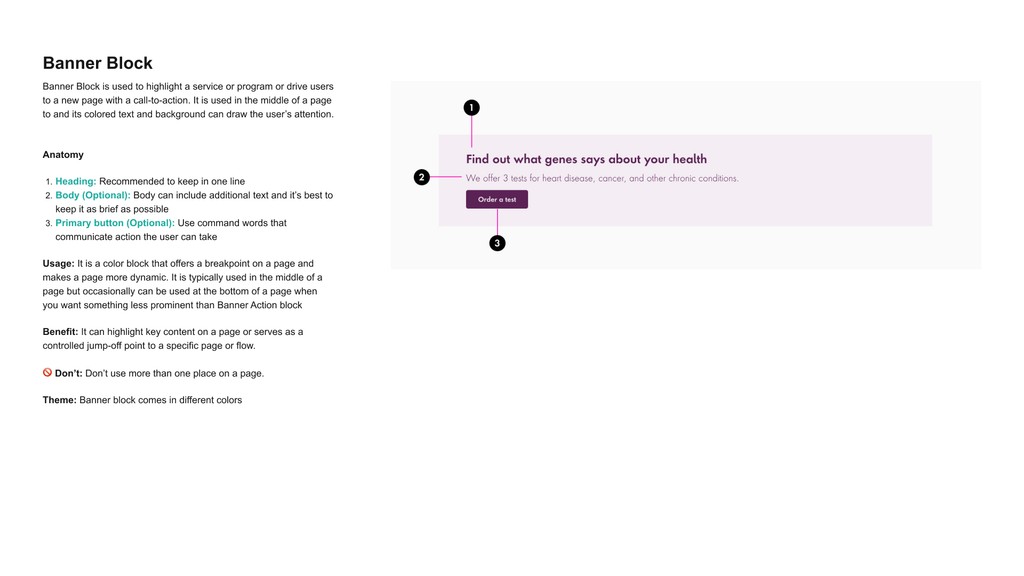
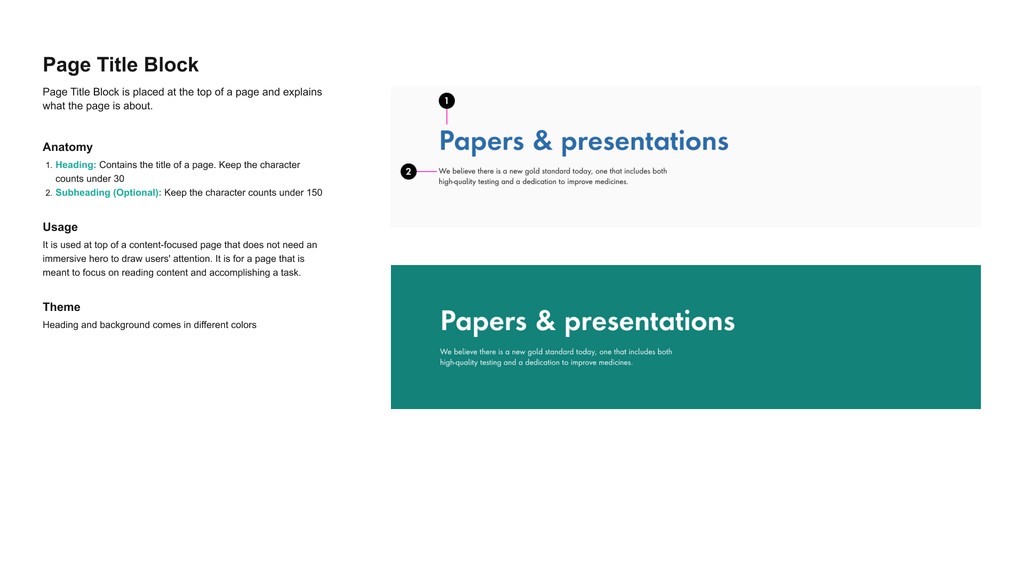
Components were built and tested directly in Contentful to ensure usability, flexibility, and consistency across different page types.Documentation
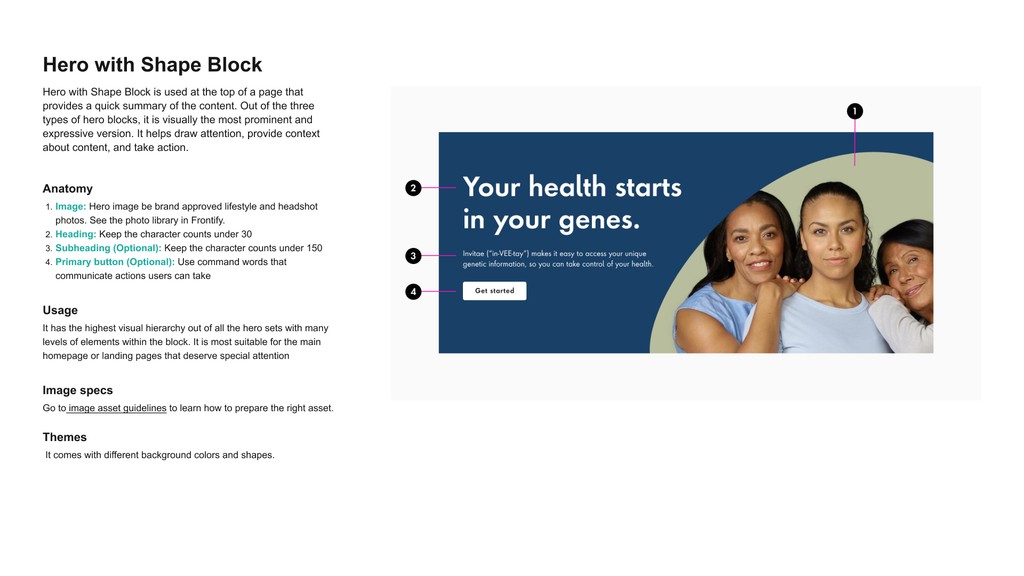
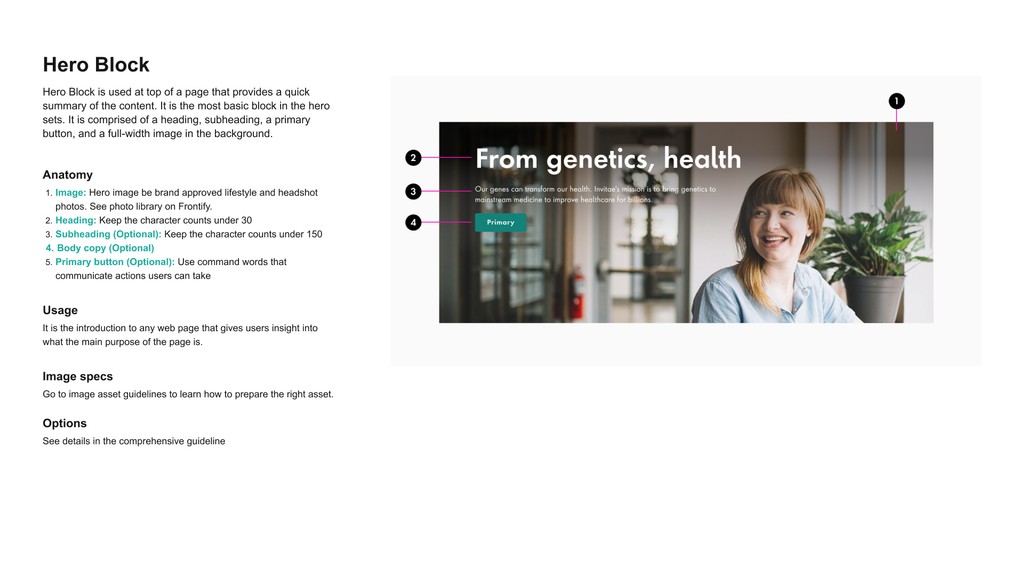
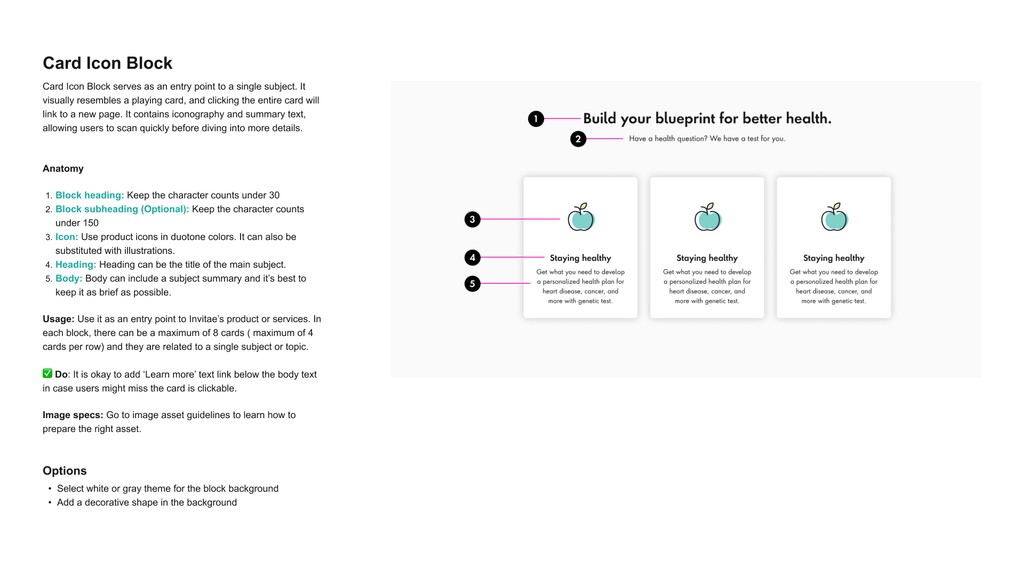
We wrote clear documentation to help content creators use the system confidently and independently.
Learnings & Iterations
At first, the scale of the project felt overwhelming—sorting through nearly 500 legacy pages was no small task. Thankfully, I had a great team, and we worked closely to untangle the content mess that had built up over years.
One of my key takeaways was recognizing why we had so much content: as a genetic testing and healthcare company, we naturally had a lot of important information to communicate, but the real challenge was prioritizing what mattered most.
After launching the new CMS, content creators could build pages quickly, but many pages became content-heavy and lacked a clear, user-centered structure. To help, I led workshops with the marketing team to refocus their approach—guiding them to think from the user’s perspective and build content that better served both business and customer needs.

Impact
The improved visual consistency and cleaner page structure made the site easier to navigate, helping users find information faster. With fewer, more focused pages, we saw improved traffic flow and better user engagement.
SEO and tracking tools gave us clearer insights into page performance—what’s working, what’s not—allowing for data-driven improvements.
It was also a huge productivity win: developers no longer need to spend time building or updating pages, and content creators can now make and publish updates in minutes instead of waiting through one or more sprints. Overall, it’s been a big efficiency boost for both teams and a better experience for users.